English | 简体中文
Cross-platform GUI automation, driven by multimodal AI vision. Drive browsers, mobile apps, full desktops, and games through pixels — no DOM, no selectors — reaching what frameworks like Playwright, Selenium, and Appium cannot.
Run it standalone (bot.open() launches a browser for you; Android / iOS / Windows-window backends are built in with zero extra dependencies), bolt it onto your existing Playwright / Selenium / Appium / pyautogui session, drop it into a pytest suite, or bind by HWND to drive a Unity / Unreal / native desktop game. Same API across all of them.
📖 Full documentation: qirabot.com/docs (中文)
qirabot_mmorpg_highlights.mp4
Play an MMORPG from zero to level 15, hands-free — iOS real device. The entire task prompt is one sentence: "This is Fantasy Westward Journey mobile. Create a character, then complete the new-player flow; skip whatever can be skipped." Highlights cut from a single unedited run: full 5:50 video · script
More real, unedited runs — the AI sees only pixels. Click a poster to watch (all demos →):
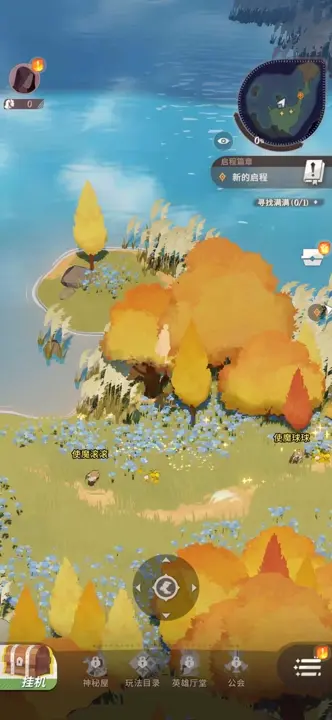
Clear AFK Journey's tutorial and reach the open world — iOS real device |

Play chess on lichess.org — Android real device |

Beat a fruit tile-match game on its own — Android real device |
One line — installs uv, qirabot (isolated, never touches your system Python), and Chromium. No pre-installed Python required:
# macOS / Linux
curl -LsSf https://qirabot.com/install | sh

# Windows (PowerShell)
powershell -ExecutionPolicy ByPass -c "irm https://qirabot.com/install.ps1 | iex"
Driving a device instead of a browser? The Android (adb), iOS (WDA), and Windows single-window backends are built into the core package:
uv tool install qirabot # Android + iOS + Windows window; zero extraspip, virtualenvs, per-framework extras, and troubleshooting:
Installation guide.
Whichever path you took, qirabot doctor reports what is installed, what is
missing (with the exact fix), and whether your API key reaches the server.
Log in once — this opens your browser to authorize the CLI and saves an
API key locally (on a headless server, open the printed URL from any device;
--paste enters a key from your dashboard manually):
qirabot loginThen hand the AI a task. Real, unedited output:
$ qirabot browser "Search for SpaceX and get the first sentence of the article" --url wikipedia.org
Task: 6237d4ff-b96b-4c7d-addb-30d8a0334970
[1/20] type_text  ← "SpaceX"
        └ Type 'SpaceX' into the Wikipedia search bar and press enter to search.
Done: Space Exploration Technologies Corp., doing business as SpaceX, is an
      American spaceflight, telecommunications, and artificial intelligence
      company headquartered at the Starbase development site in Starbase, Texas.
Every run writes an HTML report with per-step screenshots; --record
captures a video of the whole run.
For sites that need an account, log in once by hand — no API key, no tokens — and every later run that reuses the profile starts already signed in:
qirabot open-browser --user-data-dir ~/.automation --url news.ycombinator.com/login
# log in in the window, close it, then:
qirabot browser "Upvote the top story about Rust" --user-data-dir ~/.automationThe CLI is powered by the same engine. Call bot.ai() from Python and the AI
likewise looks at the screen, decides the next action, and loops until the
task is done — except the result lands directly in your code, with an
on_step callback streaming each action as it happens:
from qirabot import Qirabot, StepResult

bot = Qirabot()
page = bot.open("https://www.wikipedia.org")

def on_step(step: StepResult) -> None:
    label = "done" if step.finished else step.action_type
    print(f"  step {step.step}: {label} {step.params}")

result = bot.ai(page, "Search for SpaceX and get the first sentence of the article", on_step=on_step)
print(f"Success: {result.success}")
print(f"Result: {result.output}")

bot.close()
Prefer to drive each step yourself? The same natural-language targeting works
as single-step calls — bot.click(page, "Login button"),
bot.extract(...), bot.verify(...) — with your code in control.
No rewrite: pass your existing page / driver / device object and mix AI
steps with the selectors you already have. Add AI where selectors hurt —
visual assertions, dynamic widgets, and flows too tedious to script:
import pytest
from qirabot import Qirabot

@pytest.fixture(scope="session")
def bot():
    with Qirabot(task_name="test-checkout") as bot:   # one task per run
        yield bot

def test_checkout(page, bot):     # `page` is your pytest-playwright fixture
    page.goto("https://shop.example.com")
    page.fill("#username", "test_user")             # your selectors, as-is
    page.click("#login-btn")

    # Visual assertion — survives markup rewrites and CSS refactors
    assert bot.verify(page, "the product grid shows items with prices and no error banner")

    # One line replaces a page of brittle selector steps
    result = bot.ai(page, "Complete checkout, name John Doe zip 10001", max_steps=8)
    assert result.success
Works the same for Selenium, Appium, pyautogui, and the built-in device
backends (AdbDevice, WdaClient, Window) — and anything else via a
7-primitive custom adapter.
The model knows how to drive a UI — not your game's item names or your team's
business terms. Mount reference text for the task and the AI consults it at
every step. From the CLI, -k takes a file and repeats, 32KB total:
qirabot browser "Buy 10 stamina potions in the shop" -k game-rules.md -k gm-policy.mdFrom Python, knowledge takes literal text, a UTF-8 file, or a list mixing both:
result = bot.ai(
    device,
    "Complete every daily quest",
    knowledge=[Path("game-rules.md"), "GM commands may be used once per match"],
)
Knowledge is mounted per call: the next bot.ai() starts clean, so each stage
of a long flow carries only what it needs. Two deliberate limits: no URLs —
fetch remote sources yourself, so auth and failures stay in your code — and
knowledge guides decisions; hard rules like "once per match" belong in
custom-tool code (next section), where they can actually be enforced.
Mid-task, the AI isn't limited to clicking and typing. custom_tools
registers plain Python functions the model can invoke as it works — hit an
internal API, query a database, fetch an OTP from your mail server, seed test
data, or pause for a human at a CAPTCHA. Name, description, and parameters are
introspected from the function itself:
def gm_command(command: str) -> str:
    """Send a command to the game's GM backend and return its reply.
    Available commands: add_energy <amount>, add_gold <amount>"""
    return requests.post(GM_URL, json={"cmd": command}, timeout=10).text

result = bot.ai(
    device,
    "Complete every daily quest. If an out-of-energy popup appears, "
    "use gm_command to add 100 energy and continue",
    custom_tools=[gm_command],
)
The tool runs locally on your machine — the server never sees your endpoints or credentials — and its return value becomes the model's next observation. One instruction now spans systems that used to take a page of glue code: UI steps, backend calls, and human handoffs in a single flow. Details (schemas, error handling, pruning built-in tools): AI Tasks & Custom Tools. Runnable examples: custom_tool_gm.py · 06_human_in_the_loop.py.
| Topic | |
|---|---|
| Getting started | Installation · Quick Start · CLI Reference |
| Platforms | Browser · Android (adb, no Appium) · iOS (WDA, no Appium) · Windows & Games (DirectInput) · Desktop · Custom Adapters |
| Integrations | Playwright · Selenium · Appium · pytest |
| Advanced | AI Tasks & Custom Tools · Reports & Recording · Configuration · Error Handling |
| Reference | API — Actions & Platform Matrix |
Runnable examples live in examples/, in three styles:
- Bolt onto your existing tests (pytest) — playwright/, selenium/, appium/, desktop/
- Standalone automation (plain scripts) — scraping / RPA / agents: automation/
- Drive a game — Windows desktop games (bind by HWND) and the iOS MMORPG script behind the demo video: game/
See examples/README.md for which to pick.
plugins/qirabot/skills/qirabot/ is a pre-built agent skill: an AI agent
(Claude Code, Cursor, …) loads it and handles setup, scripting, and
verification from a natural-language automation goal. Install in Claude Code:
/plugin marketplace add qirabot/claude-plugins
/plugin install qirabot@qirabot
The skill's reference and templates are drift-tested against the live SDK in
CI (tests/test_skill.py). Details: plugins/qirabot/README.md.
2.0 removed the airtest integration; the built-in backends are drop-in
replacements (AdbDevice / WdaClient / Window), and a copyable adapter
keeps existing airtest scripts running unchanged. Guide:
Custom Adapters — Migrating from Airtest.
The 1.x series lives on the 1.x branch
in maintenance mode — pip install "qirabot<2" always resolves to the newest
1.9.x patch.
MIT